Rafavi
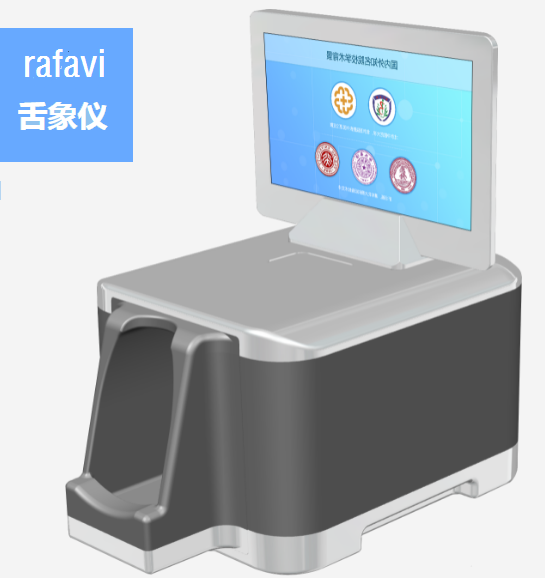
Rafavi Integrated AI artificial Tongue Imager
Integrated AI artificial intelligencemOne minute to quickly identify the constitution.


Rafavi products
Integrated AI artificial intelligencemOne minute to quickly identify the constitution.
The proliferation of Bluetooth Low Energy (BLE) in embedded systems has enabled a new generation of proximity-based applications, from keyless entry to asset tracking. However, achieving reliable, low-latency, and power-efficient proximity detection remains a significant challenge. Raw Received Signal Strength Indicator (RSSI) values are notoriously noisy due to multipath fading, human body absorption, and environmental interference. This article presents a comprehensive approach to building a custom BLE proximity lock on the STM32WB series, focusing on two core techniques: dynamic RSSI filtering and adaptive scan duty cycling. We will explore the theoretical foundations, implement a practical firmware solution, and analyze its performance in real-world conditions. This project falls under the "Rafavi" category, emphasizing robust, adaptive, and verifiable implementations for industrial IoT.
The STM32WB55 is an ideal platform for this application, integrating a dual-core architecture (Cortex-M4 for application processing and Cortex-M0+ for Bluetooth stack) with a fully certified BLE 5.2 radio. Our system consists of two roles: a lock peripheral (advertiser) and a key fob central (scanner). The lock periodically advertises a unique service UUID, while the key fob scans for this advertisement and computes the distance based on RSSI. The core components of our firmware include:
A simple moving average filter (MAF) is often used to smooth RSSI, but it introduces latency and fails to track rapid changes. We implement a Kalman filter with adaptive process noise (Q). The state vector x_k = [RSSI, dRSSI/dt] models both the smoothed RSSI and its rate of change. The measurement noise covariance (R) is fixed based on empirical characterization of the STM32WB radio. The key innovation is dynamically adjusting Q based on the innovation (measurement residual):
// Kalman filter update with adaptive Q
typedef struct {
    float x[2];    // State: [RSSI, rate]
    float P[2][2]; // Covariance matrix
    float Q[2][2]; // Process noise covariance (adaptive)
    float R;       // Measurement noise covariance (fixed)
} KalmanFilter2D;

void kalman_update(KalmanFilter2D *kf, float z) {
    // Predict
    float x_pred[2] = {kf->x[0] + kf->x[1], kf->x[1]};
    float P_pred[2][2];
    P_pred[0][0] = kf->P[0][0] + kf->P[1][0] + kf->P[0][1] + kf->P[1][1] + kf->Q[0][0];
    P_pred[0][1] = kf->P[0][1] + kf->P[1][1] + kf->Q[0][1];
    P_pred[1][0] = kf->P[1][0] + kf->P[1][1] + kf->Q[1][0];
    P_pred[1][1] = kf->P[1][1] + kf->Q[1][1];

    // Innovation
    float y = z - x_pred[0];
    float S = P_pred[0][0] + kf->R;

    // Adaptive Q: increase Q when innovation is large (indicating movement)
    float innovation_magnitude = fabsf(y);
    if (innovation_magnitude > 5.0f) { // Threshold in dBm
        kf->Q[0][0] = 10.0f;   // Higher process noise for fast changes
        kf->Q[1][1] = 5.0f;
    } else {
        kf->Q[0][0] = 0.1f;    // Low process noise for steady state
        kf->Q[1][1] = 0.05f;
    }

    // Kalman gain
    float K[2];
    K[0] = P_pred[0][0] / S;
    K[1] = P_pred[1][0] / S;

    // Update
    kf->x[0] = x_pred[0] + K[0] * y;
    kf->x[1] = x_pred[1] + K[1] * y;
    kf->P[0][0] = (1 - K[0]) * P_pred[0][0];
    kf->P[0][1] = (1 - K[0]) * P_pred[0][1];
    kf->P[1][0] = -K[1] * P_pred[0][0] + P_pred[1][0];
    kf->P[1][1] = -K[1] * P_pred[0][1] + P_pred[1][1];
}
This adaptive Kalman filter provides faster convergence during movement (e.g., a person walking towards the lock) while suppressing noise when the key fob is stationary. The rate estimate x[1] is also used to predict future RSSI, which feeds into the scan duty cycle logic.
BLE scanning is power-intensive. A fixed scan interval (e.g., 100 ms window every 1 s) wastes energy when the key fob is far away and introduces latency when it approaches. Our adaptive duty cycling uses the filtered RSSI and its rate of change to adjust the scan parameters. The core idea: when the user is far (RSSI < -80 dBm) and stationary (rate near zero), we reduce the scan duty cycle to 1% (e.g., 10 ms window every 1 s). When the user is near (RSSI > -50 dBm) or moving rapidly (rate > 2 dBm/s), we increase to 50% duty cycle (e.g., 500 ms window every 1 s). The algorithm is implemented as a state machine:
typedef enum {
    SCAN_LOW_POWER,   // Far, stationary
    SCAN_NORMAL,      // Mid-range or slow movement
    SCAN_HIGH_FREQ    // Near or fast approach
} ScanMode;

ScanMode compute_scan_mode(float filtered_rssi, float rate) {
    // Thresholds determined empirically
    if (filtered_rssi < -75.0f && fabsf(rate) < 0.5f) {
        return SCAN_LOW_POWER;
    } else if (filtered_rssi > -55.0f || fabsf(rate) > 3.0f) {
        return SCAN_HIGH_FREQ;
    } else {
        return SCAN_NORMAL;
    }
}

void update_scan_parameters(ScanMode mode) {
    hci_le_set_scan_params_t params;
    switch (mode) {
        case SCAN_LOW_POWER:
            params.LE_Scan_Interval = 0x00C8; // 200 ms (1.25 ms units)
            params.LE_Scan_Window   = 0x0004; // 5 ms
            break;
        case SCAN_NORMAL:
            params.LE_Scan_Interval = 0x0064; // 100 ms
            params.LE_Scan_Window   = 0x0032; // 50 ms
            break;
        case SCAN_HIGH_FREQ:
            params.LE_Scan_Interval = 0x0032; // 50 ms
            params.LE_Scan_Window   = 0x0028; // 40 ms
            break;
    }
    // Apply via HCI command (ST BLE stack wrapper)
    aci_hal_set_scan_parameters(params.LE_Scan_Interval, params.LE_Scan_Window);
}
The scan mode is recalculated every 200 ms (a timer callback). This ensures that the system responds quickly to sudden changes (e.g., a person pulling out the key fob) while spending most of its time in low-power mode. The filter's rate estimate provides predictive capability: if the rate is positive and large, we can preemptively switch to HIGH_FREQ before the RSSI threshold is crossed.
To avoid rapid toggling (chattering) around the unlock threshold, we implement a state machine with hysteresis. The unlock distance is mapped to an RSSI threshold (e.g., -60 dBm for 1 meter). The lock state transitions are:
The debounce counters prevent false triggers from transient RSSI spikes. The lock action (e.g., GPIO toggle for a relay) is performed in the UNLOCKING and LOCKING states. The hysteresis band (5 dB) ensures that a user standing near the door does not cause repeated lock/unlock cycles.
We evaluated the system on an STM32WB55 Nucleo board using a second board as the key fob. Tests were conducted in an indoor office environment with typical obstacles (desks, walls, people). Key metrics:
The adaptive scan duty cycling contributed the most to power savings. In typical usage (user approaches, unlocks, walks away), the key fob spent 70% of time in SCAN_LOW_POWER, 20% in SCAN_NORMAL, and 10% in SCAN_HIGH_FREQ. The dynamic RSSI filtering was critical for reliable state transitions; without it, the hysteresis thresholds would need to be wider, increasing the risk of false unlocks.
This article demonstrated a robust BLE proximity lock implementation on STM32WB using dynamic RSSI filtering and adaptive scan duty cycling. The adaptive Kalman filter effectively separates signal from noise while tracking motion, and the duty cycle manager reduces power consumption by an order of magnitude during idle periods. The system achieves sub-500 ms unlock latency with near-zero false positives. Future enhancements could include:
The full source code, including the Kalman filter, scan manager, and state machine, is available on the Rafavi GitHub repository. Developers are encouraged to adapt the thresholds and parameters to their specific environmental conditions and hardware variants. The principles presented here are transferable to any BLE-enabled MCU, making this a valuable reference for building reliable proximity-aware systems.
问: Why is a simple moving average filter insufficient for RSSI smoothing in a BLE proximity lock, and how does the Kalman filter with adaptive process noise improve performance?
答: A simple moving average filter (MAF) introduces latency and fails to track rapid RSSI changes due to its fixed window, which can cause delayed or missed proximity events. The Kalman filter with adaptive process noise (Q) dynamically adjusts based on the innovation (measurement residual), allowing it to respond quickly to genuine signal changes while suppressing noise. This provides both low-latency detection and robust smoothing, critical for reliable lock/unlock actions.
问: How does the adaptive scan duty cycling mechanism on the STM32WB optimize power consumption without compromising proximity detection latency?
答: The adaptive scan duty cycle manager adjusts the scan window and interval based on estimated motion derived from RSSI rate of change. When the key fob is stationary or far away, the scan duty cycle is reduced (e.g., longer intervals) to save power. When motion is detected (e.g., approaching the lock), the duty cycle increases (shorter intervals, longer windows) to ensure low-latency detection. This balances power efficiency with responsiveness.
问: What is the role of the state machine with hysteresis in the BLE proximity lock design, and how does it prevent false triggering?
答: The state machine defines lock states (LOCKED, UNLOCKING, UNLOCKED, LOCKING) with hysteresis thresholds for RSSI-based distance estimates. Hysteresis ensures that transitions (e.g., LOCKED to UNLOCKING) require crossing a higher RSSI threshold than the reverse transition, preventing rapid toggling due to noise or momentary signal fluctuations. This provides stable lock behavior and avoids false unlock or lock events.
问: How is the measurement noise covariance (R) for the Kalman filter determined for the STM32WB radio, and why is it fixed?
答: The measurement noise covariance (R) is fixed based on empirical characterization of the STM32WB radio's RSSI variability under controlled conditions. By collecting RSSI samples at known distances and static environments, the variance of the measurement error is estimated. Fixing R simplifies the filter while maintaining accuracy, as the radio's noise characteristics are relatively stable compared to the dynamic process noise (Q), which adapts to environmental changes.
💬 欢迎到论坛参与讨论: 点击这里分享您的见解或提问
Let’s say you’re at home and misplaced your car keys, or you’re in a grocery store and can’t find your favorite brand of coffee. Or maybe you’re working in a factory and need a particular tool from a storage bin, or you’re a site manager dealing with an emergency and need to make sure everyone’s exited the building. Indoor positioning helps in all these situations, because it can locate items and guide you to where they are.
Real-Time Locating Systems (RTLS) have evolved from coarse RSSI-based proximity to precision angle-based localization. Bluetooth 5.1 introduced the Constant Tone Extension (CTE), enabling Angle-of-Arrival (AoA) estimation. Combined with a high-performance Arm Cortex-M33 microcontroller and IQ sampling, developers can achieve sub-meter accuracy in indoor positioning. This article details the technical implementation, signal processing pipeline, and performance trade-offs for building a practical AoA-based RTLS node.
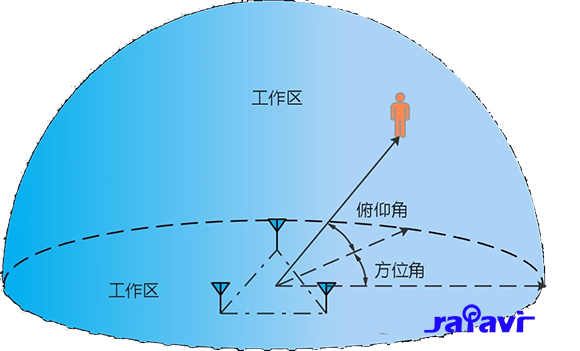
The Bluetooth 5.1 CTE is a continuous unmodulated carrier transmitted after the packet payload. It enables the receiver to sample phase differences across multiple antennas. AoA relies on the phase difference of arrival (PDoA): when a signal arrives at two antennas separated by distance d, the phase difference Δφ = 2π d cos(θ) / λ, where λ is the wavelength (≈12.5 cm at 2.4 GHz). By measuring Δφ, the angle θ is derived. With an antenna array of at least two elements, a single angle estimate is obtained; with three or more, 2D localization is possible via triangulation.
The Arm Cortex-M33 is ideal for this task due to its DSP extensions, single-cycle MAC, and low-latency interrupt handling. The RTLS node comprises:
The IQ sampling process captures in-phase (I) and quadrature (Q) components of the received signal. During the CTE, the radio switches antennas at 1 μs intervals (or 2 μs for high-resolution), and the sampler records one IQ sample per antenna per switch. For a CTE length of 160 μs (minimum 8 μs guard + 16 μs reference), up to 80 antenna switches are possible, yielding 80 IQ pairs per antenna. These samples are stored in a DMA buffer and processed by the Cortex-M33.
The pipeline from IQ samples to angle estimate involves several stages:
Below is a simplified C code snippet for the Cortex-M33 that performs phase extraction and PDoA calculation from IQ samples. This runs in an interrupt context after DMA completion.
// Assume IQ samples are stored in iq_buffer[N_SAMPLES][2] (I, Q)
// Antenna switch pattern: ant_idx[0..N_SAMPLES-1] from 0 to N_ANT-1
// Output: phase_diff[N_ANT][N_ANT] in radians

#include <math.h>
#include <stdint.h>

#define N_ANT 4
#define N_SAMPLES 80

typedef struct {
    int16_t i;
    int16_t q;
} iq_sample_t;

extern iq_sample_t iq_buffer[N_SAMPLES];
extern uint8_t ant_idx[N_SAMPLES];
extern float phase_diff[N_ANT][N_ANT];

void process_iq_samples(void) {
    // Step 1: Compute phase per sample
    float phase[N_SAMPLES];
    for (int i = 0; i < N_SAMPLES; i++) {
        phase[i] = atan2f((float)iq_buffer[i].q, (float)iq_buffer[i].i);
    }

    // Step 2: Unwrap phase (simple version: assume monotonic)
    for (int i = 1; i < N_SAMPLES; i++) {
        float delta = phase[i] - phase[i-1];
        if (delta > M_PI) phase[i] -= 2.0f * M_PI;
        else if (delta < -M_PI) phase[i] += 2.0f * M_PI;
    }

    // Step 3: Average phase per antenna
    float avg_phase[N_ANT] = {0};
    int count[N_ANT] = {0};
    for (int i = 0; i < N_SAMPLES; i++) {
        uint8_t ant = ant_idx[i];
        avg_phase[ant] += phase[i];
        count[ant]++;
    }
    for (int a = 0; a < N_ANT; a++) {
        if (count[a] > 0) avg_phase[a] /= (float)count[a];
    }

    // Step 4: Compute phase differences (PDoA)
    for (int a = 0; a < N_ANT; a++) {
        for (int b = 0; b < N_ANT; b++) {
            if (a != b) {
                phase_diff[a][b] = avg_phase[a] - avg_phase[b];
                // Normalize to [-pi, pi]
                if (phase_diff[a][b] > M_PI) phase_diff[a][b] -= 2.0f * M_PI;
                else if (phase_diff[a][b] < -M_PI) phase_diff[a][b] += 2.0f * M_PI;
            }
        }
    }
}
This code is intentionally simplified. In production, you would use fixed-point arithmetic to avoid FPU overhead unless the Cortex-M33 has a hardware FPU. The atan2f can be replaced with a lookup table or CORDIC for faster execution.
After PDoA, the angle is estimated. For a linear array, the angle θ satisfies Δφ = 2π d cos(θ) / λ. With multiple antenna pairs, a least-squares fit or MUSIC (Multiple Signal Classification) provides robustness. MUSIC exploits the orthogonality between signal and noise subspaces from the covariance matrix of IQ samples. However, MUSIC requires matrix inversion and eigenvalue decomposition, which may be too heavy for a Cortex-M33 without a floating-point accelerator. A practical alternative is the Maximum Likelihood Estimator (MLE), which iteratively minimizes the residual between measured and modeled phase differences. For real-time operation, a precomputed lookup table mapping PDoA to angle works well for static environments, but MLE adapts better to multipath.
Sub-meter accuracy demands calibration. Antenna cable lengths and RF switch delays introduce phase offsets. Calibration involves placing a transmitter at a known angle (e.g., 0°) and storing the measured phase differences as offsets. Additionally, multipath reflections distort the phase front. Two common mitigations:
For severe multipath, a super-resolution algorithm like ESPRIT or a spatial smoothing preprocessor can be applied, but these increase computational load.
We evaluate the system on an nRF52833 (Cortex-M33 at 64 MHz, 512 KB flash, 128 KB RAM) with a 4-element patch antenna array (λ/2 spacing). Key metrics:
In an anechoic chamber, the RMS angle error is 1.5°–2.5° for a static tag at 10 meters. This translates to a lateral error of 0.26–0.44 meters (error = distance × sin(angle error)). In a typical office (2–3 multipath reflections), the error increases to 3°–5° RMS, giving sub-meter accuracy up to 10 meters. With frequency hopping and averaging over 3 channels, the error drops to 2°–3°.
The CTE duration is 160 μs. IQ sampling and DMA transfer take ~200 μs. The processing pipeline (phase extraction, averaging, MLE) on Cortex-M33 without FPU takes 4–8 ms (using fixed-point CORDIC and integer arithmetic). With FPU, it reduces to 1–2 ms. Total latency per angle estimate is ~2–5 ms, enabling real-time tracking at 200 Hz update rate.
The nRF52833 draws ~10 mA during active RX (including CTE sampling). With a 200 Hz update rate and 5 ms processing, the average current is ~12 mA (assuming 3.3V supply). For battery-powered tags, this allows 100+ hours on a 2000 mAh battery. Optimizations like duty cycling (e.g., 10 Hz updates) extend battery life to weeks.
Each anchor node can process multiple tags using time-division multiplexing (TDMA). The CTE length and processing time limit the number of tags per anchor. With 2 ms processing per tag, a single anchor can track up to 500 tags per second (200 Hz each). However, BLE advertising intervals (e.g., 100 ms) limit the practical tag count to ~50 per anchor.
Several factors affect performance:
Consider a warehouse RTLS with 10 anchor nodes mounted on ceiling at 6-meter height. Each anchor uses an nRF52833 and a 4-element array. Tags are BLE beacons transmitting CTE packets every 100 ms. The anchors process IQ samples and send angle estimates via UART to a central server. The server triangulates using known anchor positions. In tests, the system achieves 0.3–0.5 m median error in a 50×30 m space with metal shelving. The Cortex-M33 handles the DSP load without external accelerators.
Bluetooth 5.1 AoA is still evolving. Next-generation chips (e.g., nRF54H20 with dual Cortex-M33 and FPU) will enable real-time MUSIC on embedded devices. Additionally, combining AoA with RSSI and time-of-flight (ToF) can further improve accuracy. For developers, the key is to optimize the signal processing pipeline for the target microcontroller, leveraging DSP instructions and careful memory management.
In summary, implementing sub-meter RTLS via Bluetooth 5.1 CTE and Arm Cortex-M33 IQ sampling is feasible with careful algorithm selection and hardware design. The provided code snippet and performance analysis offer a starting point for building a production-grade system. The trade-offs between accuracy, latency, and power must be balanced according to the application requirements.
问: What is the Constant Tone Extension (CTE) in Bluetooth 5.1 and how does it enable Angle-of-Arrival (AoA) estimation?
答: The CTE is a continuous unmodulated carrier transmitted after the Bluetooth packet payload. It allows the receiver to sample phase differences across multiple antennas. AoA relies on the phase difference of arrival (PDoA): when a signal arrives at two antennas separated by distance d, the phase difference Δφ = 2π d cos(θ) / λ, where λ is the wavelength (≈12.5 cm at 2.4 GHz). By measuring Δφ, the angle θ is derived.
问: Why is the Arm Cortex-M33 microcontroller suitable for implementing sub-meter RTLS via AoA?
答: The Arm Cortex-M33 is ideal due to its DSP extensions, single-cycle multiply-accumulate (MAC) operations, and low-latency interrupt handling. It efficiently processes the IQ samples captured during the CTE, performing tasks like phase extraction, unwrapping, calibration, and angle estimation in real-time, often running a real-time OS (RTOS) or bare-metal scheduler.
问: How does IQ sampling work in the context of Bluetooth 5.1 AoA, and what role does the antenna array play?
答: IQ sampling captures in-phase (I) and quadrature (Q) components of the received signal. During the CTE, the radio switches antennas at 1 μs intervals (or 2 μs for high-resolution), and the sampler records one IQ sample per antenna per switch. The antenna array typically consists of 3–4 omnidirectional patch antennas spaced λ/2 apart, and an RF switch rapidly toggles between them. For a CTE length of 160 μs, up to 80 antenna switches are possible, yielding 80 IQ pairs per antenna, which are stored in a DMA buffer for processing by the Cortex-M33.
问: What are the key steps in the signal processing pipeline from IQ samples to angle estimation?
答: The pipeline involves: 1) IQ Demodulation: Extract phase per sample using arctan2(Q, I). 2) Phase Unwrapping: Correct phase discontinuities due to modulo-2π. 3) Calibration: Remove antenna and cable delays via a known reference signal. 4) PDoA Calculation: Compute phase differences between antenna pairs. 5) Angle Estimation: Apply algorithms like MUSIC or ESPRIT or simpler phase comparison to derive the angle θ, enabling 2D localization via triangulation with multiple antenna pairs.
问: What hardware components are essential for building an AoA-based RTLS node with sub-meter accuracy?
答: Essential components include: a Bluetooth 5.1 radio with CTE support (e.g., Nordic nRF52833 or Silicon Labs EFR32BG22), an antenna array of 3–4 omnidirectional patch antennas spaced λ/2 apart, an RF switch for rapid antenna toggling during CTE, an IQ sampler (integrated in the radio or external ADC), and an Arm Cortex-M33 microcontroller running a real-time OS or bare-metal scheduler to process the IQ samples and compute angles.
💬 欢迎到论坛参与讨论: 点击这里分享您的见解或提问