广告

可选:点击以支持我们的网站

免费文章

TWS Bluetooth Headsets

In the rapidly evolving landscape of wireless audio, True Wireless Stereo (TWS) earbuds have become ubiquitous. However, the introduction of Bluetooth LE Audio, built upon the Low Energy (LE) physical layer and the LC3 codec, marks a paradigm shift. This article delves into the technical underpinnings of TWS earbuds equipped with LE Audio, focusing on how they achieve both ultra-low latency and high-fidelity audio, and examines their implications for the industry.

Introduction: The Promise of LE Audio

Traditional Bluetooth Classic (BR/EDR) audio, relying on the SBC or AAC codecs, has long been plagued by latency issues—often exceeding 150-200 milliseconds in typical TWS configurations. This delay is particularly detrimental for gaming, video synchronization, and real-time communication. LE Audio, ratified as part of the Bluetooth 5.2 specification, addresses these limitations by introducing a fundamentally different architecture. At its core, LE Audio leverages the LC3 (Low Complexity Communication Codec) codec, which offers superior compression efficiency at lower bitrates, and the Isochronous Adaptation Layer, which enables synchronized, low-latency data streaming over the LE physical layer. This combination allows TWS earbuds to achieve end-to-end latencies as low as 20-30 milliseconds while maintaining audio fidelity comparable to or better than SBC at higher bitrates.

Core Technology: How LE Audio Enables Low-Latency and High-Fidelity

To understand the performance leap, it is essential to dissect the three core components of LE Audio in TWS earbuds:

  • LC3 Codec Efficiency: LC3 is the successor to SBC, mandated by the Bluetooth SIG. It provides significantly better audio quality at the same bitrate. For instance, at 160 kbps, LC3 delivers near-transparent audio for most content, whereas SBC requires 328 kbps to achieve similar fidelity. This efficiency reduces the audio data packet size, which directly lowers transmission time and, consequently, latency. Furthermore, LC3's low algorithmic delay (typically 5 ms) is a critical factor, as it minimizes the encoding/decoding buffer time.
  • Isochronous Channels and Multi-Stream Audio: LE Audio introduces isochronous channels, which are time-synchronized data streams. In a TWS setup, the smartphone can transmit two independent isochronous streams—one to the left earbud and one to the right earbud—simultaneously. This eliminates the "relay" latency inherent in Classic Bluetooth TWS configurations, where the primary earbud forwards audio to the secondary earbud. The result is a near-perfect stereo image with no phase or timing mismatch, crucial for immersive audio experiences.
  • Auracast Broadcast Audio: While not directly related to low latency, Auracast, built on LE Audio, enables a single source to broadcast audio to an unlimited number of receivers. For TWS earbuds, this means low-latency, high-fidelity audio can be shared in public spaces (e.g., airports, cinemas) without the pairing overhead. The broadcast mode uses a highly efficient synchronization mechanism, ensuring that all receivers decode the audio within a tight time window.

These technologies work in concert. For example, in a gaming scenario, the LC3 codec reduces the computational load on the earbud's DSP, while the isochronous channels ensure that the left and right channels are perfectly timed. Industry tests, such as those from the Bluetooth SIG, have demonstrated that LE Audio can achieve a round-trip latency of under 30 milliseconds in optimized TWS implementations, compared to the 100-200 milliseconds typical of Classic Bluetooth.

Application Scenarios: Where LE Audio Shines

The low-latency and high-fidelity capabilities of LE Audio unlock several critical use cases that were previously challenging for TWS earbuds:

  • Gaming and Augmented Reality (AR): For mobile gaming, audio-visual synchronization is paramount. LE Audio's sub-30ms latency eliminates the noticeable lip-sync errors and audio delays that plague Classic Bluetooth gaming. In AR applications, where audio must be spatially anchored to visual elements, this low latency is non-negotiable. The high fidelity of LC3 also ensures that complex game soundtracks and spatial audio cues are rendered accurately.
  • Professional Audio Monitoring: Musicians and sound engineers often rely on wired in-ear monitors for live performances due to latency concerns. LE Audio TWS earbuds, with their deterministic low latency and high dynamic range, are beginning to replace wired solutions. The LC3 codec supports up to 24-bit/96 kHz audio in some implementations, providing the necessary fidelity for critical listening.
  • Hearing Augmentation and Assistive Listening: LE Audio's Auracast feature allows TWS earbuds to function as hearing aids or assistive listening devices in public venues. The low latency ensures that users hear audio in real-time, crucial for understanding speech in noisy environments. The high-fidelity reproduction of speech frequencies (300 Hz to 3.4 kHz) is enhanced by LC3's efficient encoding of transient sounds.
  • Real-Time Communication: For voice and video calls, LE Audio reduces the "talk-over" effect caused by latency. The isochronous channels also enable true stereo voice pickup, where each earbud's microphone captures audio independently, improving beamforming and noise cancellation algorithms.

Future Trends: Beyond LE Audio

While LE Audio is already a significant advancement, the ecosystem is evolving rapidly. Several trends are poised to shape the next generation of TWS earbuds:

  • Integration with Spatial Audio and Head Tracking: Future TWS earbuds will combine LE Audio's low-latency streams with inertial measurement units (IMUs) for dynamic spatial audio. The isochronous channels allow for precise timing of head-tracking data, ensuring that the audio scene rotates seamlessly with the user's head movement. Companies like Qualcomm and Apple are already exploring this for their next-generation chipsets.
  • Multi-Device and Mesh Networks: LE Audio's isochronous architecture can be extended to support mesh networks, where multiple TWS earbuds communicate directly without a central hub. This could enable new use cases like multi-user audio sharing in collaborative work environments or synchronized audio for large groups (e.g., silent discos).
  • AI-Enhanced Codec Optimization: The LC3 codec is flexible, allowing for adaptive bitrate control. Future TWS earbuds may leverage on-device AI to dynamically adjust the codec parameters based on the audio content (e.g., speech vs. music) and the radio frequency environment, optimizing for latency or fidelity as needed.
  • Energy Efficiency and Smaller Form Factors: LE Audio's lower power consumption (compared to Classic Bluetooth) allows for smaller batteries or longer playback times. This, combined with advanced packaging technologies, will enable even more compact TWS designs without compromising audio quality or latency.

Industry data from ABI Research projects that by 2027, over 60% of new TWS earbuds will support LE Audio, driven by the demand for low-latency gaming and immersive audio experiences. The transition will be accelerated by smartphone manufacturers, such as Qualcomm's Snapdragon Sound platform, which natively supports LE Audio and LC3.

Conclusion

LE Audio represents a fundamental rethinking of wireless audio transmission, moving from the legacy Classic Bluetooth paradigm to a more efficient, synchronized, and scalable architecture. For TWS earbuds, this translates into tangible benefits: latency reductions of up to 80% compared to SBC-based systems, and audio fidelity that rivals wired connections in many scenarios. As the technology matures, we can expect TWS earbuds to become the default choice for not only casual listening but also latency-sensitive applications like gaming, professional audio, and real-time communication. The convergence of LC3 codec efficiency, isochronous multi-streaming, and Auracast broadcasting is setting a new standard for what wireless audio can achieve.

In summary, TWS earbuds with LE Audio deliver a transformative combination of ultra-low latency (sub-30ms) and high-fidelity audio (via the LC3 codec), enabling seamless gaming, professional monitoring, and real-time communication, while future trends point toward spatial audio integration and AI-driven optimization that will further elevate the wireless listening experience.
  • Bluetooth Version: 5.4
  • Chip Brand: Jieli
  • Chip Model: 7006D4

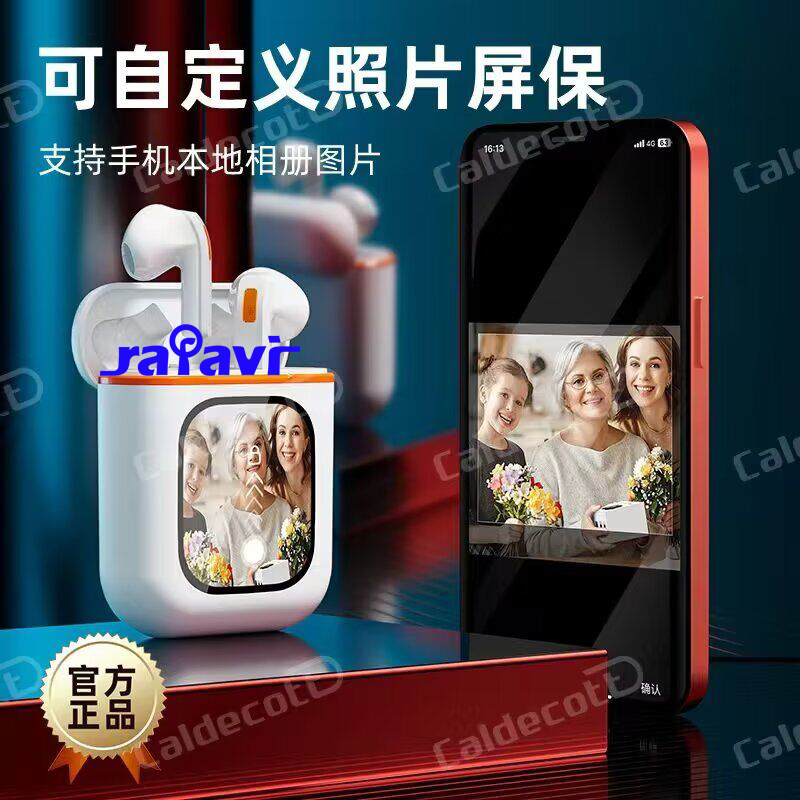
Customizable photo screensaver, support connected mobile phone pictures.

Support short video social APP control: page scroll, volume adjusting, like,

Connect phone and compartment at the same time.Easy switch local and phone musics.

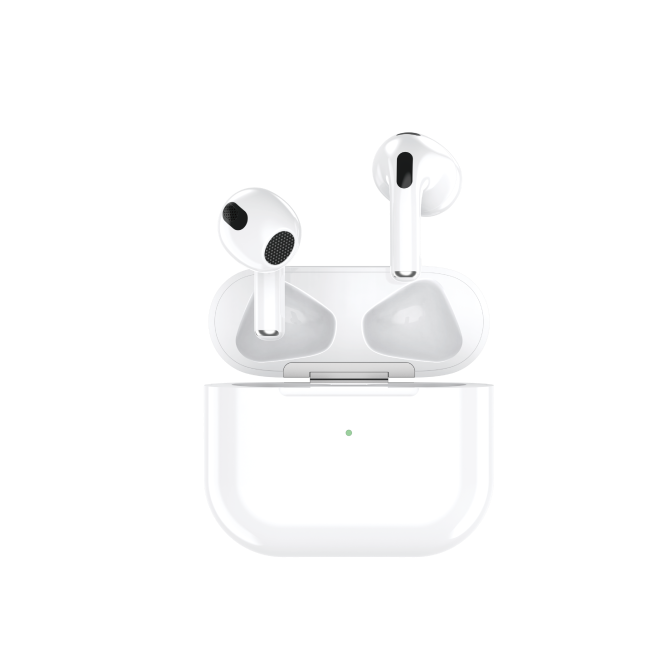
  • Brand / Product logo: rafavi TWS Air3 Pro

Button battery extra long standby
Precision shell material original texture
The smart charging compartment can be fully charged for 8 months
Three true power display support renamed positioning
Composite membrane speaker HiFi sound
Simple carton packaging & small wooden box packaging

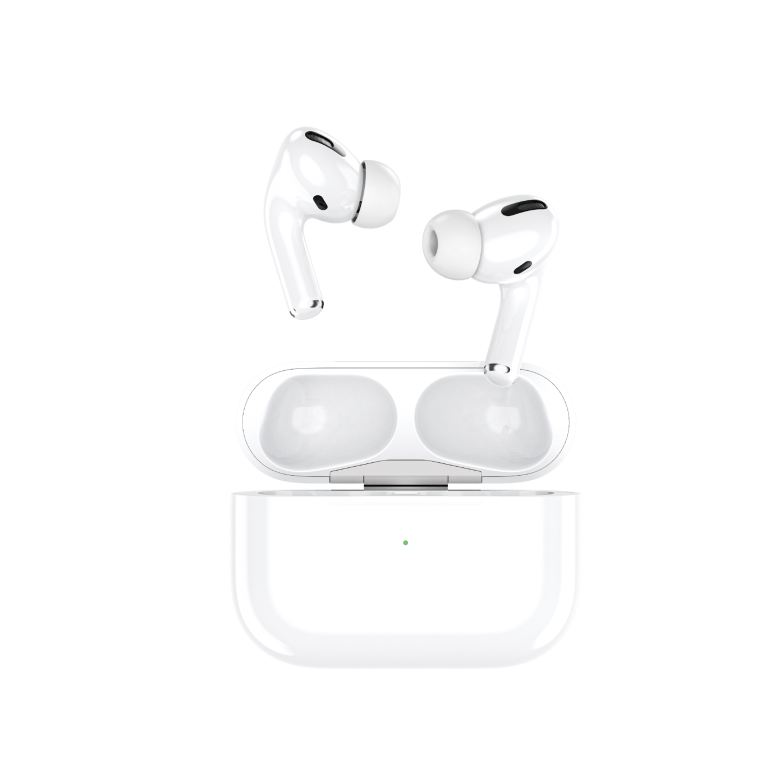
  • Brand / Product logo: rafavi TWS T3Pro

Button battery extra long standby
Precision shell material original texture
The smart charging compartment can be fully charged for 8 months
Three true power display support renamed positioning
Composite membrane speaker HiFi sound
Simple carton packaging & small wooden box packaging

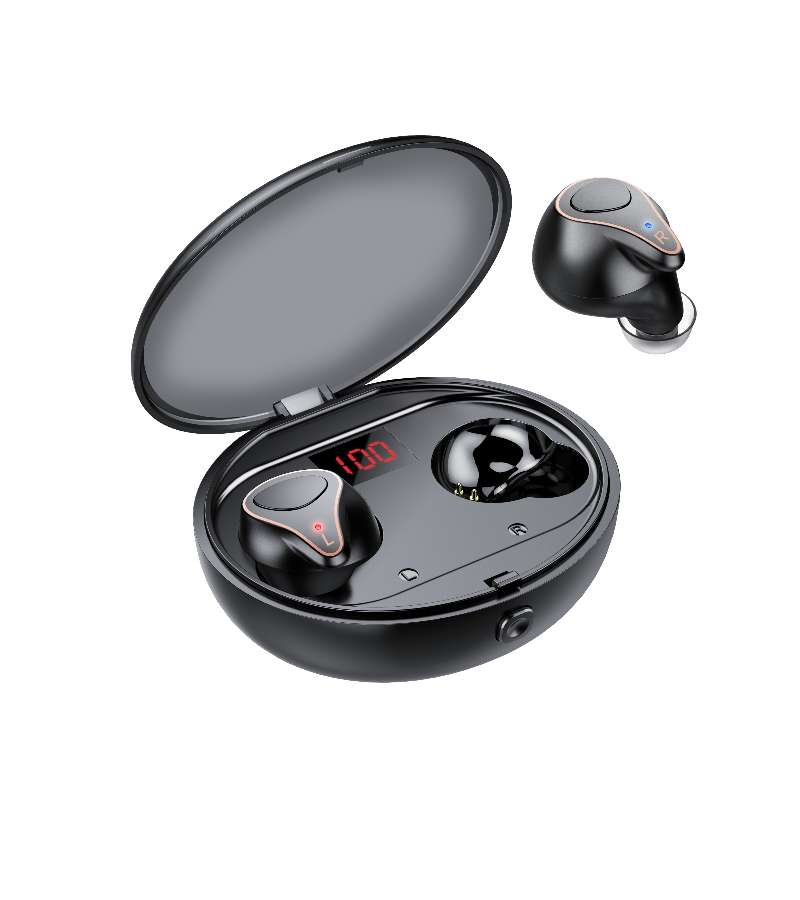
rafavi e2 01
Support call, music, voice prompt, listen to e-books

Bluetooth protocol: A2DP, AVRCP, HFP, HSP
Call Duration: 6 hours
Music duration (normal volume): 5 ~ 6 hours
Battery capacity: 40 mah
Charging case battery capacity: 400 mA

Specifications:
Charging case Charging input: DC5.0V=400mA
Charging box output: DC5.0V=70mA (single)

Main competitive advantage: Distance of 20 meters (with no obstacles)

In the rapidly evolving landscape of wireless audio, the introduction of Auracast—a Bluetooth LE Audio broadcast feature—has unlocked unprecedented potential for public announcement systems in high-traffic environments like stadiums and airports. For the TWS Bluetooth headset industry, this technology represents a paradigm shift from traditional one-to-one audio streaming to one-to-many broadcast, enabling seamless, low-latency audio delivery to an unlimited number of listeners. This article delves into the technical architecture, design considerations, and future implications of Auracast-based public announcement systems, focusing on how they transform user experience in large venues.

Core Technology: Auracast and Bluetooth LE Audio

Auracast is a broadcast audio feature defined in the Bluetooth LE Audio specification, formally introduced in Bluetooth 5.2 and refined in subsequent versions. Unlike classic Bluetooth (BR/EDR), which supports point-to-point connections, Auracast enables a single transmitter (e.g., a stadium PA system) to broadcast audio streams to multiple receivers (e.g., TWS earbuds) simultaneously. This is achieved through the LE Isochronous Channel (LE-ISOC), which allocates time slots for synchronized data transmission, ensuring low latency (typically < 50 ms) and high reliability.

For TWS headsets, Auracast requires support for the LE Audio stack, including the LC3 codec, which provides superior audio quality at lower bitrates (e.g., 160-345 kbps) compared to SBC or AAC. This efficiency is critical for public announcement systems, where multiple audio streams—such as gate changes, emergency alerts, or multilingual translations—must be broadcast without overwhelming bandwidth. Additionally, Auracast supports encryption and authentication, allowing venue operators to control access to specific broadcasts (e.g., for staff-only channels).

Application Scenarios in Stadiums and Airports

The design of Auracast-based public announcement systems must address the unique challenges of large venues: acoustic noise, signal propagation, and user mobility. Below are key application scenarios, each requiring tailored implementation.

  • Multilingual Announcements in Airports: In international airports, announcements often need to be delivered in multiple languages simultaneously. Auracast enables the transmitter to broadcast several audio streams (e.g., English, Mandarin, Arabic) on different channels. TWS headsets can scan for available broadcasts, and users select their preferred language via a companion app or on-device menu. For example, a gate change announcement in Terminal 3 can be broadcast on channel A (English) and channel B (Spanish), with each stream encoded at 192 kbps using LC3, ensuring clarity even in noisy terminal environments (ambient noise levels up to 75 dB SPL).
  • Emergency Alerts in Stadiums: During emergencies (e.g., fire, security threats), traditional PA systems may be drowned out by crowd noise. Auracast can broadcast critical alerts directly to users' TWS earbuds, with priority overriding any ongoing audio playback. The system can leverage multiple BLE beacons placed around the stadium (e.g., one per section) to ensure coverage, using a mesh network for redundancy. Latency must be below 30 ms for real-time updates, which is achievable with LE-ISOC and proper scheduling. Additionally, the broadcast can include location-specific instructions (e.g., "Evacuate via Gate 12") by encoding metadata in the broadcast packet.
  • Assistive Listening for Hearing-Impaired Users: Auracast can replace traditional FM or induction loop systems for assistive listening. TWS headsets with hearing aid profiles can receive a dedicated broadcast, with audio processed to enhance speech intelligibility (e.g., dynamic range compression). In a stadium with 50,000 seats, this eliminates the need for rental receivers, reducing cost and logistical complexity.
  • Zone-Specific Audio for Retail and Wayfinding: In airports, Auracast can broadcast zone-specific information, such as duty-free promotions in Terminal B or boarding gate reminders in Terminal C. TWS headsets can automatically switch broadcasts as users move between zones, using BLE-based location tracking. This requires a network of Auracast transmitters (e.g., one per 50-meter radius) with overlapping coverage, managed by a central controller to avoid interference.

Design Considerations for TWS Headset Integration

To fully leverage Auracast in stadiums and airports, TWS headsets must incorporate several hardware and software features. First, the Bluetooth controller must support LE Audio and the Broadcast Audio Profile (BAP), which defines the broadcast sink role. Many current TWS chipsets (e.g., Qualcomm QCC5171, MediaTek MT2828) already include this support, but firmware updates may be needed for older models.

Second, power consumption is a critical factor. Auracast reception is more efficient than classic Bluetooth streaming, as the headset only needs to listen for scheduled isochronous packets rather than maintaining a continuous connection. However, scanning for available broadcasts can drain battery—optimized scanning intervals (e.g., 100 ms) and low-power listening modes (e.g., using a dedicated BLE core) are essential. Industry data suggests that Auracast-enabled TWS earbuds can achieve 8-10 hours of continuous broadcast listening with a 50 mAh battery, comparable to standard music playback.

Third, user interface design must be intuitive. For stadiums, users may need to select a broadcast channel via a simple tap on the earbuds (e.g., triple tap to cycle through languages). In airports, a companion app can provide a list of available broadcasts with metadata (e.g., "Gate A12 – English Announcement"). The headset should also support dynamic switching: if a user is listening to music and a priority broadcast (e.g., emergency alert) is detected, the headset should automatically pause music and route the broadcast audio, with a notification tone.

Future Trends and Challenges

The adoption of Auracast in public announcement systems is still nascent, but several trends will shape its evolution. One major trend is the integration with 5G and Wi-Fi 6E for hybrid broadcasting. While Auracast operates over BLE (2.4 GHz), stadiums may use 5G edge computing to aggregate and synchronize broadcasts across multiple Auracast transmitters, reducing latency for time-sensitive alerts. Another trend is the use of AI for personalized audio: for example, a TWS headset could use beamforming microphones to isolate a user's voice while receiving Auracast broadcasts, enabling two-way communication with venue staff.

Challenges remain, particularly in interference management. In a stadium with 100+ Auracast transmitters, the 2.4 GHz spectrum can become congested, especially with coexisting Wi-Fi and classic Bluetooth devices. Advanced channel hopping algorithms (e.g., adaptive frequency hopping with 40 channels) and transmit power control (e.g., -20 to +10 dBm) are necessary to minimize collisions. Additionally, privacy concerns arise: broadcasts may be intercepted by unauthorized receivers, but encryption (AES-128) and broadcast codes can mitigate this. Venues must also ensure compliance with local regulations (e.g., FCC Part 15 in the US) for BLE transmission power.

Finally, ecosystem interoperability is key. The Bluetooth SIG has defined the Public Broadcast Profile (PBP) to standardize broadcast metadata, such as language codes and announcement types. TWS headset manufacturers must adhere to these profiles to ensure seamless operation across different venues. As of 2025, major chipset vendors (e.g., Nordic, Infineon) are releasing reference designs for Auracast-capable TWS, and airports like Singapore Changi and stadiums like SoFi Stadium are piloting pilot systems.

Conclusion

Auracast-based public announcement systems represent a transformative leap for TWS Bluetooth headsets, enabling scalable, low-latency, and personalized audio delivery in stadiums and airports. By leveraging LE Audio's broadcast capabilities, venues can enhance accessibility, improve emergency response, and reduce infrastructure costs. However, successful deployment requires careful design of transmitter networks, power-efficient headset integration, and robust interference management. As the technology matures, Auracast will likely become a standard feature in TWS earbuds, bridging the gap between personal audio and public communication.

Auracast is revolutionizing public announcement systems by enabling TWS headsets to receive synchronized, low-latency broadcasts in large venues, with future advancements in hybrid connectivity and AI-driven personalization set to redefine the user experience.